The Lie

2015-06-13 002

I have no idea why I lied to the shoemaker.  When I did it, I was instantly horrified by my inability to tell him the truth.  It’s been almost two years since I lied to him, and it still sticks with me and makes me feel like a fraud.  Maybe I can’t let it go because, now, there’s no way to make it right anymore.

Maybe the shoemaker would have understood, but maybe not.  He was a kind, gentle man and he really liked my husband.  Every time I went into his shop, he spoke of my husband and how friendly he was to him.  My husband’s kindness to him meant so much to the shoemaker. He made that abundantly clear each time I went into his shop.  Sometimes I had to fight really hard to hold back my tears.

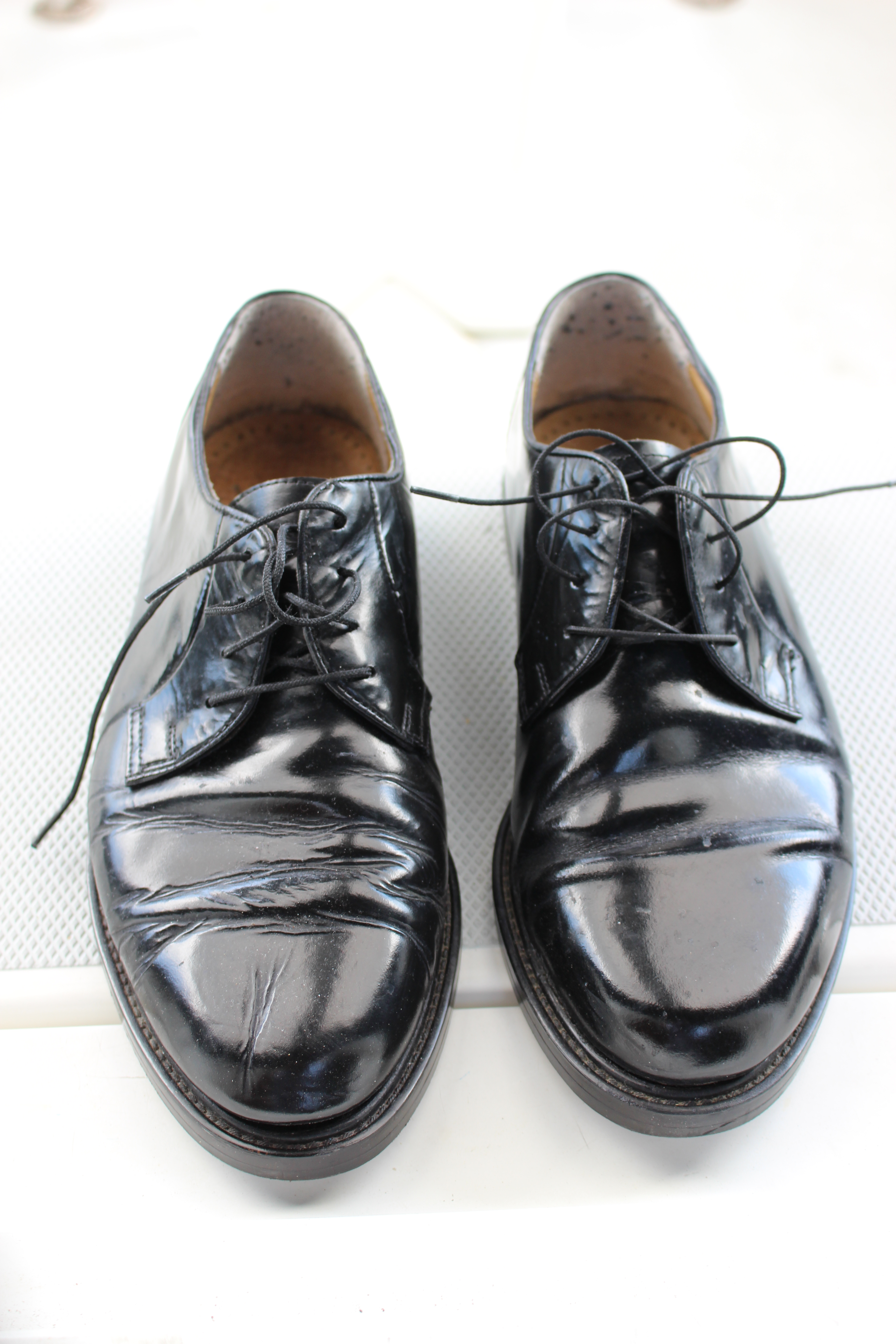
When I walked through the door of the shoemaker’s shop, a buzzer rang in the back of the store, signaling a customer.  As I turned over my sack, black wing tips–sized 10 ½– tumbled out and rested on their sides on the front counter of the dimly-lit shop.

“These need new heels,” I said.   I realized that I hadn’t even said hello to him.  I hadn’t even thought to exchange the pleasantries that my husband would have exchanged with him.  The old man didn’t seem to notice as he picked up each shoe, inspecting the bottoms of them.

“Unt soles,” he added.  “You see vere the stitches are vorn?”  I looked closely to where he pointed.  “Soon they vill rip, yes?”  I nodded.

In the twenty years since I had first met the shoemaker, neither his face nor his charming Austrian accent had changed very much.  He seemed eternally youthful and always kind. Only the color of his hair had changed over the years.  It had been dark brown; now it was the color of steel.

“Unt whose shoes are these?”

He knew they couldn’t possibly belong to my husband.  My husband had died suddenly almost ten years before.  He tilted his head forward, eyebrows raised, and peered over the tops of his eyeglasses looking me straight in the eye.  I froze.

“My son’s.  These shoes are my son’s shoes.”

“Ah, your son’s,” he answered almost wistfully.

Immediately I felt foolish and cruel—foolish for the lie and cruel as I remembered that this old man had lost his own son years before in a terrible accident.  His son had been a brilliant and talented young man and his future had been ripped from him one night by a local drunk driver with a record of DWI’s.

Had I triggered renewed sorrow in the old shoemaker by mentioning my own son?  I searched his eyes for any possible flicker of pain and was relieved that his expression had not changed.

“Have you been fishing lately?”  I asked a little too brightly.  He, like my husband, was a fly fisherman.  As he always did, he worked his answer around what he really wanted to say—what he said each time I came into the shop.  He told me, once again, what a fine man my husband was.

“You know, some people hear my accent and turn avay, like I am not verth speaking to.  Your husband vas alvays kind to me.  We had many fine conversations.  You must miss him.”

“Yes, I do miss him. Everyday.  He was a very fine man,” I said before the lump gathering within my throat made it impossible to answer.

As I walked out of the shop and into the morning sunlight I realized that everything I had told the shoemaker was the truth—Everything.  Except the part about whose shoes those really were.

Circles, Part 1

circles, zentangle

Circles.  I have always loved circles.  As a young child I drew them in the sand at the beach and in muddy soil in my backyard.  I drew them with chalk on the street in front of my house and doodled them in English class–around and around and around, hypnotically making circles within circles, different sizes, but always the same shape.

No matter where I was—the beach, the sidewalk, or a parking lot—if I happened to spy a pebble that looked like a perfect circle, I’d stoop down, scoop it up, and put it in my pocket.  I still do this, I might add.  I especially love rocks worn smooth by the tumbling action of waves upon sand.  Their smooth, rounded perfection calls to me. Once nestled in the deepest part of my pocket, it is mine–a treasure waiting to soothe weary fingertips.

It is said that it is impossible to draw a perfect circle freehand–unless you are Giotto di Bondone.  He was an Italian artist from the early fourteenth century who broke from the artistic tradition of his time and painted realistic forms exactly as they appear in nature. The story of Giotto’s circle—the perfect, red O he painted when asked to give a sample of his work  to the Pope—is legendary in the world of visual art.

“Pope Benedict lX wanted to commission some paintings for St. Peter’s and so he sent a courtier around to find the best painter in Italy. The courtier asked all the artists to give him a sample of their work to send to the Pope. He came to Giotto’s workshop, explained his mission, and asked him for a drawing which would give the Pope some idea of his competence and style. “Sure,” said Giotto; and he laid down a sheet of paper, reached for a brush dipped in red paint, closed his arm to his side to make a sort of compass of it, and in one even sweep scribed a perfect circle. “There you are,” he told the courtier, handing it to him with a smile.

“That’s your drawing?” asked the courtier, who didn’t know whether Giotto was pulling his leg. “Is that all you’re going to send His Holiness?” “That’s more than enough,” said Giotto. “Send it with your other drawings and see whether it’s understood or not.” The Pope’s messenger took the drawing and went away trying to hold his temper. Did that little painter think he was a fool? When he got back to Rome he showed the Pope the big O and told him how Giotto had scribed it—freehand, without a compass. The pope and his advisers DID understand the achievement of that O and gave Giotto the commission.” (http://theorbitbrown.com/site/chris-orbit-brown)

Because a circle may be drawn from beginning to end without a break, it is a powerful symbol and the most common and universal sign found in all cultures.  It represents completeness and eternity. Ancient cultures believed that circles were sacred signs, symbolizing life, the seasons, the stars, planets, sun, and moon.  To this day the circle symbolizes the unending nature of love itself.

Circles are always with us. Our eyes—the windows of the soul, some say—have circular irises and pupils that invite just the right amount of light within to secure proper vision. Blood cells, transporters of life-giving nutrients, resemble circles under a microscope. Our arms, legs, and necks are built to accommodate circular motion. Our arms can encircle lover or child, offering comfort, protection, and promise. Our lips, where love begins with words and kisses, and our breasts, where new life is nourished, are soft and rounded and circular.  They are inviting and soothing to the touch.

I have always loved circles.


Skeleton Tree–A Different Sort of 9-11 Story

Skeleton Tree
Skeleton Tree

Twin Towers


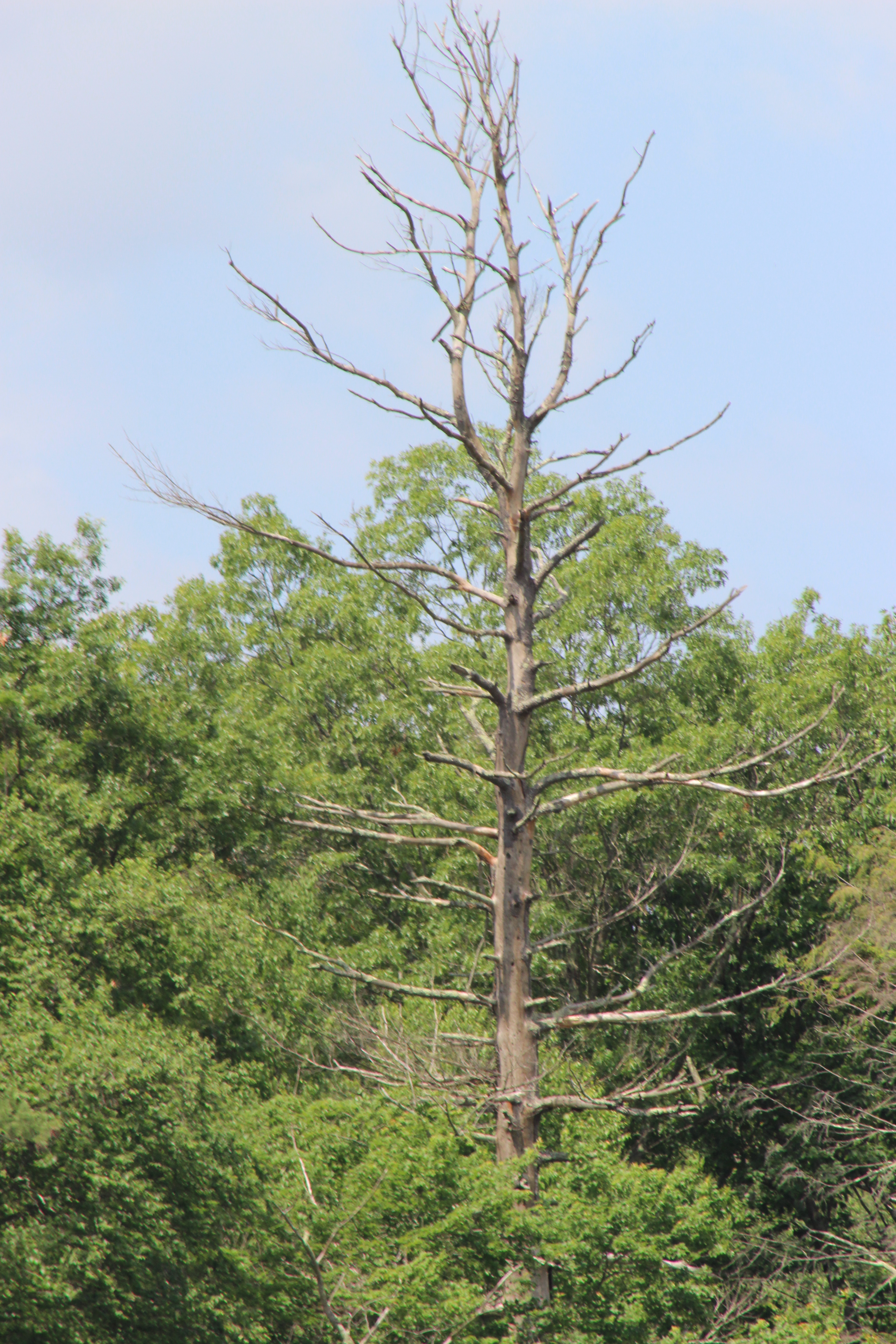
She could see the skeleton tree from the back seat as we drove along Route 97.  I noticed it, too–set way back from the road, its bleached branches raised upward in frozen supplication–a stark image against the leafy trees that surrounded it.

“How come that tree has no leaves?” she asked.  The way her little voice lilted upward at the end of each question brought a smile to my heart.

“That tree died a long time ago, so it can’t grow leaves anymore,” I explained.  I wanted to keep my explanation simple and antiseptic.   Surely by adding the words “a long time ago,” its death would seem less immediate and therefore less frightening–more like something you might read in a history book before turning the page. The truth was that I needed the distance from its death more than she did. Discussing the death of any living thing put me in an uncomfortable frame of mind, but she wasn’t going to let it rest.

“Why do trees die?” she asked.

Plausible reasons scrolled through my mind.  I filtered them, keeping some, rejecting others.  “Some trees die because they get sick.  Some just get too old to live.  Some are pushed over in storms, and others don’t get enough food or water.”  It was the perfect answer for an inquisitive three-year-old—a blend of detail and simplicity.  I was proud of myself, ready to close the book on this part of our conversation and move to another topic.

“But why do they die?” she asked again.  I felt my mind being pulled toward philosophical treatises, spiritual wanderings, and cosmic truths, but she is only three years old, so I stuck to literal biology.

“All living things die eventually.”

As soon as the words escaped my lips, I realized my answer had the potential to upset her.  Her response was immediate.

“I’m not going to die. I eat food and I drink water.”

I could see the connections she was making: She is not old or sick, and she stays inside during storms. She has plenty to eat and drink, so, of course, she will not die like the tree on the side of the road.  She had formulated this totally logical conclusion, so who was I to dispute it?  I carefully agreed with her, without telling a lie.

“Yes, you do eat food and drink water,” I said, glancing in the rear view mirror to scan her face for signs of distress.  She was smiling, and it was clear that her mind was already preoccupied with other thoughts.

Mine was not.

Those innocent words–“I’m not going to die”—punctured a deep, dark place in my mind, unleashing a swarm of hellish possibilities that usually wait to torment me in the darkest hours of night.  Grotesque images grabbed at my mind and taunted me.  They threatened to do her unspeakable harm as she prattled on about sweet, simple things.

I felt panic rise to my throat. An overwhelming urge came over me to pull the car to the side of the road, rush to her and hug her tightly.  I wanted to bury my face in her curly blonde hair, and shield her from the terrors of life’s what-ifs.

Instead I drove on.

She spoke innocently about cows and geckos and imaginary friends while I wrestled my hideous, bone-chilling fears back to the dark, cavernous hollows of my mind.  If only I could bury those demons deeply enough, I thought.  If only I could lock them away for eternity.  Surely, I reasoned, if I could do that, they would never find her.

Labor Day

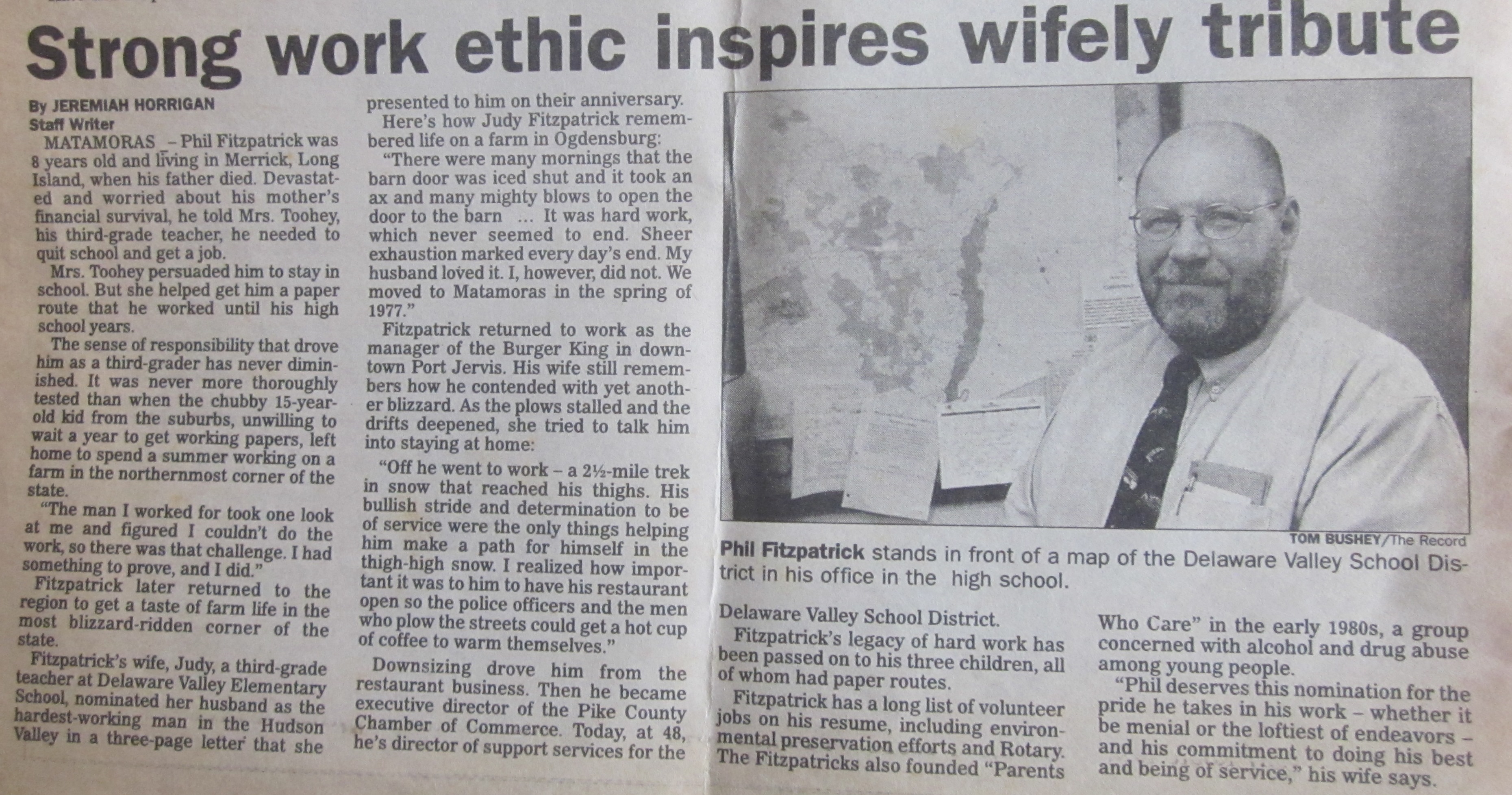
Hardest Working Man, 1998

He was eight years old and in the third grade.  He remembered having breakfast with his dad after his father had gone to daily mass. His dad took the train to work each morning and moonlighted as a cabby at night.  He was always tired and the boy rarely saw him, so having breakfast with his dad was a special treat.

It was April Fool’s Day, 1958. At first, the boy thought it was a cruel trick that someone was playing on him, but it wasn’t a trick.  His father never came home that night.

The boy’s mother didn’t want her children to go to the funeral home, but some of the aunts and uncles got to him anyway.  “You are the man of the house now,” they said.  “You must take care of your mother.”  At that very moment, the boy’s childhood was lost to him.  Now he needed to be responsible.  He needed to work.  He felt like his family’s financial survival depended upon him.

The day his father was buried, the young boy walked into the principal’s office and told him that he needed to quit school and get a job.  The principal was a very wise man and treated the child like the adult he was trying to become.

“Will you consider staying if I can get you a job after school?” the principal asked.  The boy nodded.  He arranged for the boy to have a paper route–120 papers to be delivered before dinner every day.  The boy rode his bicycle to every house, and he gave his mother every penny he earned.

His sense of responsibility never diminished.  He always found a job even when others could not, and he never slacked off.  At fifteen, he was too young for working papers, but that didn’t stop him.  He signed up for the farm cadet program.  Working papers weren’t required for farm work.

He was sent to a farm in Hammond, New York, ten miles from the Canadian border.  The farmer looked at the chubby boy from Long Island and was instantly disappointed.  Surely this portly teenager could not possibly be able to do the physical work required to run a farm, and he told the boy as much.  “This work isn’t for everybody.  There’s no shame in leaving,” he told the boy.  It was as if a gauntlet had been thrown; he silently accepted the challenge.  There was no way he was quitting.  That was the summer the hay bales were packed so tightly in the barn that it was difficult for the farmer to get them loose that winter.  Never had the farmer hired a stronger or more relentless worker.

The boy grew up, married, and became a father of three children before his twenty-seventh birthday.  Like his own father, he worked two jobs to support his family—managing a fast food business by day and working with a plumber at night.  Just like the boy he once was, his own children saw their father only for a brief time at the dinner table each night.

His dedication to serve was never more evident than in the winter of 1978 when blizzard conditions stalled the municipal plows and the snow drifts deepened, covering cars and fences.   His wife tried to persuade him to stay home.

“No one will be out.  The plows haven’t even come through.  How will you get to work?” she pleaded.  She worried that a three-mile walk down country roads at four in the morning could be dangerous, but he would not be dissuaded.  She watched him walk down the long driveway to the road, pushing through the thigh-high snow with his powerful legs.  His bullish determination and brute strength pushed him forward as he plowed through the snow with each stride.  He could not stay home.  He needed to open his restaurant to offer hot coffee and breakfast to the police officers who were on-duty and the men who plowed the streets.

As a young man, he preferred physical labor.  Over time he had worked with an electrician, a landscaper, a plumber, and a mason.  He worked in a lumberyard, a church, a gas station, and an ice cream shop.  The very last job he ever had was really five jobs rolled into one.  It was too much for any one person to do, but he did not give up and would not complain.  His wife was concerned for his health. “This job is going to kill you,” she once told him in exasperation. She meant it to be a shocking statement.  Maybe it would convince him to go to his boss and finally ask for help.  But he had never encountered a job that he could not do.  He was proud, so he worked all the harder.

Like all the other work he had ever done, he gave that last impossible job his all.  In the end, it took more than he had to give.  After he died, they hired three people to take his place.

Labor Day.  It is the day I think of that little boy and the man he ultimately became.  I honor his memory.  He was the hardest-working person I have ever known.  He was my husband.


Labor Day.   A time set aside to honor those who work—men and women who sweat to make a living, men and women whose occupations require bodily strength, intellect, or a combination of both, men and women who labor and sacrifice for the good of their families, their communities, and our nation.  

Labor Day.  A time to be thankful for the labors of our neighbors, our friends, and our family.  A time to honor those who came before us and acknowledge their contributions.  A time to say “thanks” to the hardest -working people we know.

Hardest Working Man, 1998