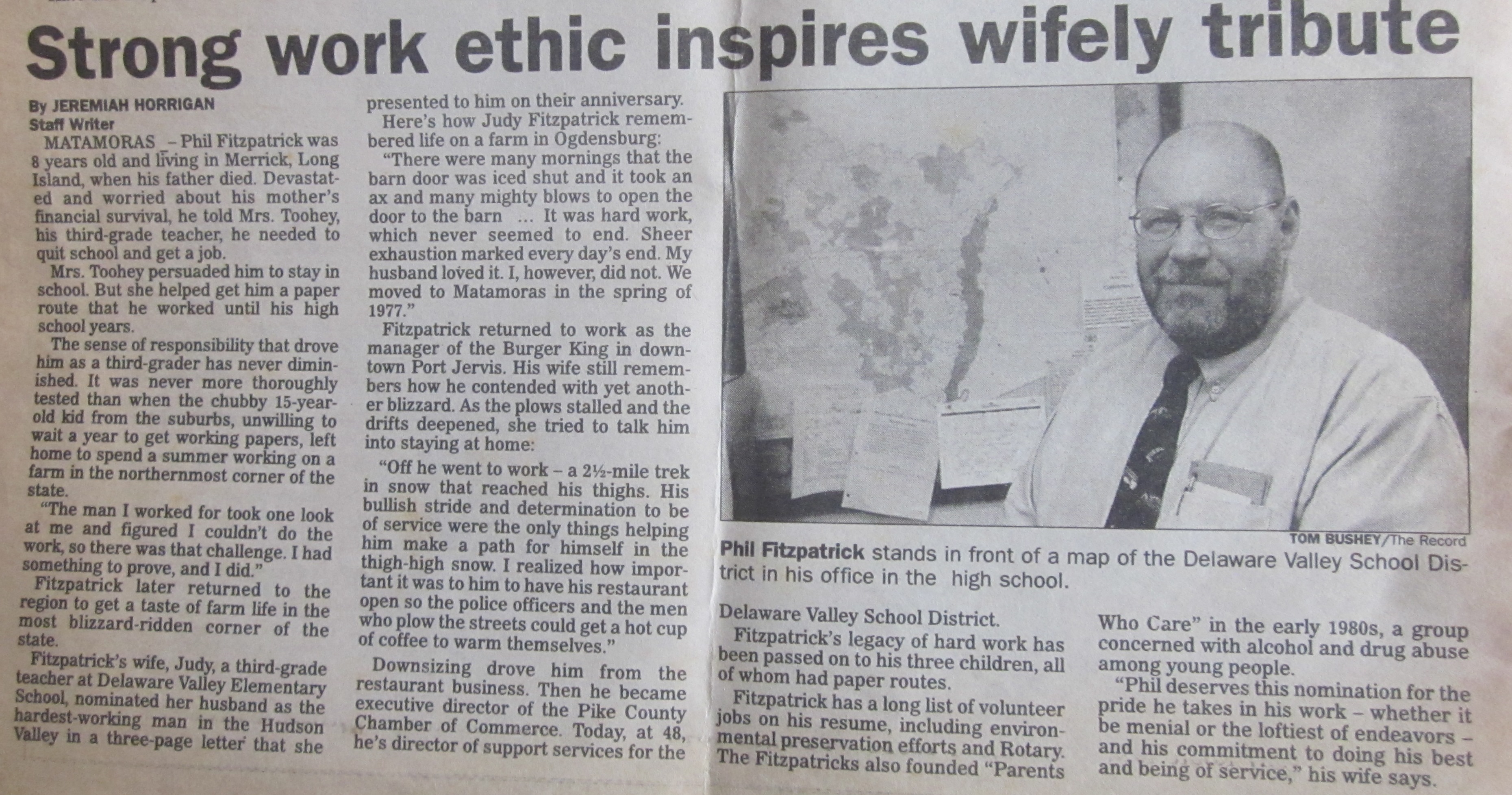
Skeleton Tree–A Different Sort of 9-11 Story

Skeleton Tree
Skeleton Tree

Twin Towers


She could see the skeleton tree from the back seat as we drove along Route 97.  I noticed it, too–set way back from the road, its bleached branches raised upward in frozen supplication–a stark image against the leafy trees that surrounded it.

“How come that tree has no leaves?” she asked.  The way her little voice lilted upward at the end of each question brought a smile to my heart.

“That tree died a long time ago, so it can’t grow leaves anymore,” I explained.  I wanted to keep my explanation simple and antiseptic.   Surely by adding the words “a long time ago,” its death would seem less immediate and therefore less frightening–more like something you might read in a history book before turning the page. The truth was that I needed the distance from its death more than she did. Discussing the death of any living thing put me in an uncomfortable frame of mind, but she wasn’t going to let it rest.

“Why do trees die?” she asked.

Plausible reasons scrolled through my mind.  I filtered them, keeping some, rejecting others.  “Some trees die because they get sick.  Some just get too old to live.  Some are pushed over in storms, and others don’t get enough food or water.”  It was the perfect answer for an inquisitive three-year-old—a blend of detail and simplicity.  I was proud of myself, ready to close the book on this part of our conversation and move to another topic.

“But why do they die?” she asked again.  I felt my mind being pulled toward philosophical treatises, spiritual wanderings, and cosmic truths, but she is only three years old, so I stuck to literal biology.

“All living things die eventually.”

As soon as the words escaped my lips, I realized my answer had the potential to upset her.  Her response was immediate.

“I’m not going to die. I eat food and I drink water.”

I could see the connections she was making: She is not old or sick, and she stays inside during storms. She has plenty to eat and drink, so, of course, she will not die like the tree on the side of the road.  She had formulated this totally logical conclusion, so who was I to dispute it?  I carefully agreed with her, without telling a lie.

“Yes, you do eat food and drink water,” I said, glancing in the rear view mirror to scan her face for signs of distress.  She was smiling, and it was clear that her mind was already preoccupied with other thoughts.

Mine was not.

Those innocent words–“I’m not going to die”—punctured a deep, dark place in my mind, unleashing a swarm of hellish possibilities that usually wait to torment me in the darkest hours of night.  Grotesque images grabbed at my mind and taunted me.  They threatened to do her unspeakable harm as she prattled on about sweet, simple things.

I felt panic rise to my throat. An overwhelming urge came over me to pull the car to the side of the road, rush to her and hug her tightly.  I wanted to bury my face in her curly blonde hair, and shield her from the terrors of life’s what-ifs.

Instead I drove on.

She spoke innocently about cows and geckos and imaginary friends while I wrestled my hideous, bone-chilling fears back to the dark, cavernous hollows of my mind.  If only I could bury those demons deeply enough, I thought.  If only I could lock them away for eternity.  Surely, I reasoned, if I could do that, they would never find her.

Labor Day

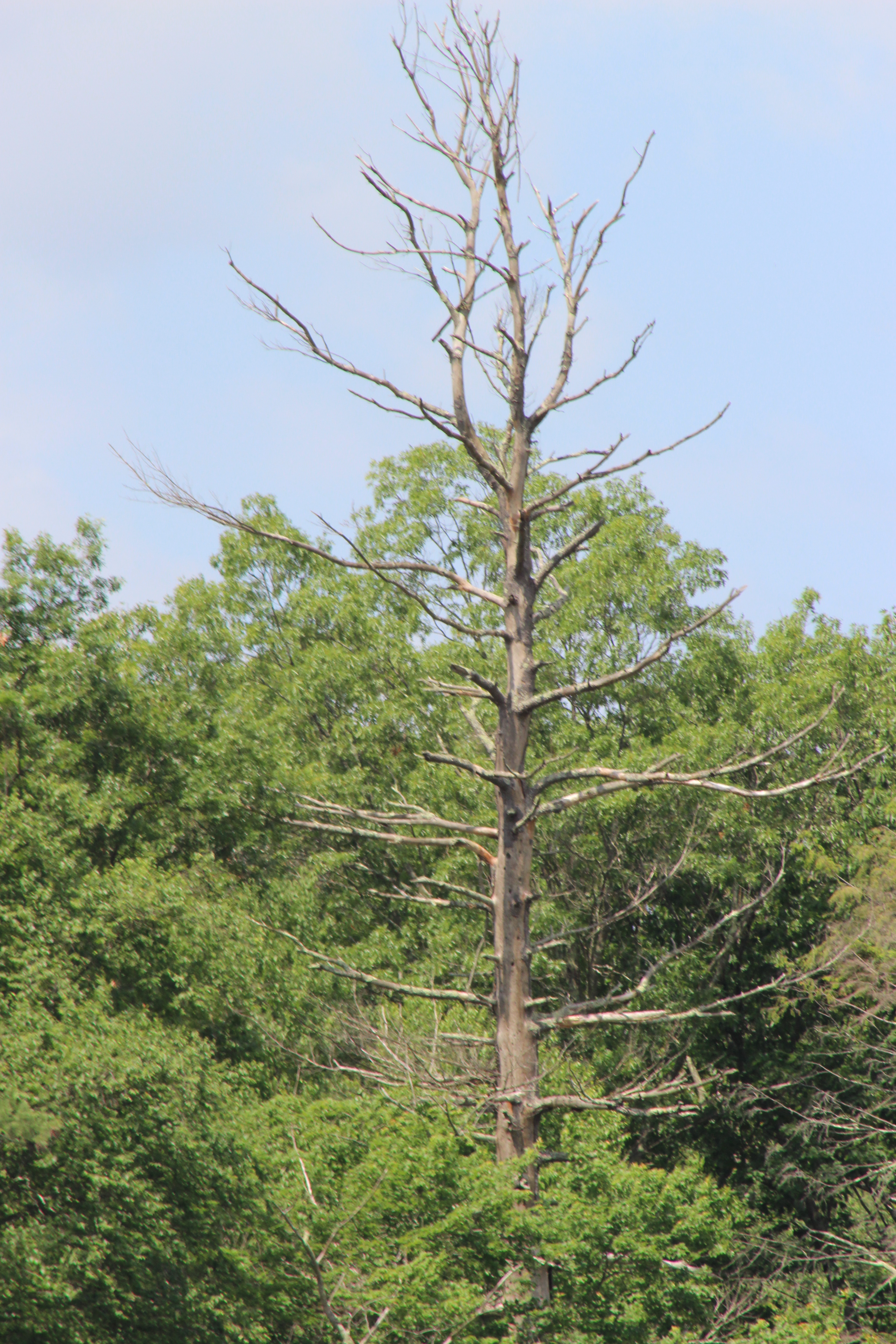
Hardest Working Man, 1998

He was eight years old and in the third grade.  He remembered having breakfast with his dad after his father had gone to daily mass. His dad took the train to work each morning and moonlighted as a cabby at night.  He was always tired and the boy rarely saw him, so having breakfast with his dad was a special treat.

It was April Fool’s Day, 1958. At first, the boy thought it was a cruel trick that someone was playing on him, but it wasn’t a trick.  His father never came home that night.

The boy’s mother didn’t want her children to go to the funeral home, but some of the aunts and uncles got to him anyway.  “You are the man of the house now,” they said.  “You must take care of your mother.”  At that very moment, the boy’s childhood was lost to him.  Now he needed to be responsible.  He needed to work.  He felt like his family’s financial survival depended upon him.

The day his father was buried, the young boy walked into the principal’s office and told him that he needed to quit school and get a job.  The principal was a very wise man and treated the child like the adult he was trying to become.

“Will you consider staying if I can get you a job after school?” the principal asked.  The boy nodded.  He arranged for the boy to have a paper route–120 papers to be delivered before dinner every day.  The boy rode his bicycle to every house, and he gave his mother every penny he earned.

His sense of responsibility never diminished.  He always found a job even when others could not, and he never slacked off.  At fifteen, he was too young for working papers, but that didn’t stop him.  He signed up for the farm cadet program.  Working papers weren’t required for farm work.

He was sent to a farm in Hammond, New York, ten miles from the Canadian border.  The farmer looked at the chubby boy from Long Island and was instantly disappointed.  Surely this portly teenager could not possibly be able to do the physical work required to run a farm, and he told the boy as much.  “This work isn’t for everybody.  There’s no shame in leaving,” he told the boy.  It was as if a gauntlet had been thrown; he silently accepted the challenge.  There was no way he was quitting.  That was the summer the hay bales were packed so tightly in the barn that it was difficult for the farmer to get them loose that winter.  Never had the farmer hired a stronger or more relentless worker.

The boy grew up, married, and became a father of three children before his twenty-seventh birthday.  Like his own father, he worked two jobs to support his family—managing a fast food business by day and working with a plumber at night.  Just like the boy he once was, his own children saw their father only for a brief time at the dinner table each night.

His dedication to serve was never more evident than in the winter of 1978 when blizzard conditions stalled the municipal plows and the snow drifts deepened, covering cars and fences.   His wife tried to persuade him to stay home.

“No one will be out.  The plows haven’t even come through.  How will you get to work?” she pleaded.  She worried that a three-mile walk down country roads at four in the morning could be dangerous, but he would not be dissuaded.  She watched him walk down the long driveway to the road, pushing through the thigh-high snow with his powerful legs.  His bullish determination and brute strength pushed him forward as he plowed through the snow with each stride.  He could not stay home.  He needed to open his restaurant to offer hot coffee and breakfast to the police officers who were on-duty and the men who plowed the streets.

As a young man, he preferred physical labor.  Over time he had worked with an electrician, a landscaper, a plumber, and a mason.  He worked in a lumberyard, a church, a gas station, and an ice cream shop.  The very last job he ever had was really five jobs rolled into one.  It was too much for any one person to do, but he did not give up and would not complain.  His wife was concerned for his health. “This job is going to kill you,” she once told him in exasperation. She meant it to be a shocking statement.  Maybe it would convince him to go to his boss and finally ask for help.  But he had never encountered a job that he could not do.  He was proud, so he worked all the harder.

Like all the other work he had ever done, he gave that last impossible job his all.  In the end, it took more than he had to give.  After he died, they hired three people to take his place.

Labor Day.  It is the day I think of that little boy and the man he ultimately became.  I honor his memory.  He was the hardest-working person I have ever known.  He was my husband.


Labor Day.   A time set aside to honor those who work—men and women who sweat to make a living, men and women whose occupations require bodily strength, intellect, or a combination of both, men and women who labor and sacrifice for the good of their families, their communities, and our nation.  

Labor Day.  A time to be thankful for the labors of our neighbors, our friends, and our family.  A time to honor those who came before us and acknowledge their contributions.  A time to say “thanks” to the hardest -working people we know.

Hardest Working Man, 1998

The Dress, 1971

August 29, 1971
August 29, 1971

Like an outcast, it hangs in the back of my closet.  Dust gathers on its yellowed shoulders and its neckline sags like an old woman’s toothless grin.  It is my wedding dress—a relic pushed aside, crowded to the wall of my closet.  Sometimes I feel guilty about not having taken better care of it.  After all, it IS a memento of eternal love and devotion.

Once in a while in a weak moment, I consider trying it on.  How would it look?  How would it feel? I close my eyes to conjure up the young woman who wore it forty-four years ago but instead, a mental image of Miss Haversham — the old woman in Great Expectations who never removed her wedding dress after being jilted many years before–horrifies me back to reality. I resist the temptation, reasoning with myself that even if I were able to squeeze myself into it, there’s a good chance I might not be able to get if off without calling for help.  I wasn’t willing to chance that kind of embarrassment. So there it hangs–a garment meant to be worn just once–a reminder of the happiest day of my life and a testament to the many years which have passed since that day.

It had always been my dream to sew my own wedding dress.  I never even considered the possibility of buying one.  My mother wasn’t too keen on the idea, probably because I had a history of starting sewing projects that never made it to the finished stage.  That wasn’t the only problem.  Over the years, Mom was there to share in the countless fashion disasters of my own making.  I’m sure she was trying to save me from myself.

No amount of arguing could persuade me.  I was so adamant about sewing my own wedding dress that she finally decided not to push the issue.  After all, when it comes to the dreams a girl has about her wedding and her wedding dress, most women sense  that it’s akin to committing a grave, unpardonable sin to interfere.  Interfering may not secure you a place with the eternally damned, but your life on Earth may become pretty hellish for a while.

In the 1970’s it was not unreasonable to want to sew my own wedding dress.  This was a time when lovers were getting married barefooted in fields of wild flowers to tunes strummed out on guitars.  Girls wore “granny dresses” and wreaths of flowers in their long, flowing hair.  Things were simpler then and many brides didn’t even worry about applying make-up or having their hair curled.  Many brides picked their own bouquets right before the ceremony.  (These were the girls that didn’t worry about ticks back then. Or dirt, or rain, or the reception, for that matter.)

My wedding was fairly formal for 1971.  I had a wreath of flowers in my hair but they were done up by the same florist who made up my bouquet of roses and daisies.  I set my hair that morning with my electric curlers and carefully put on a bit of make-up, too.  We were married by a priest in a church to tunes strummed out on guitars.  After all, it was 1971.

My dress resembled a granny dress, but it wasn’t by choice.  That was the predominant style offered by the pattern companies in 1971.  The only patterns that were truly different and quite complicated were in the Vogue pattern book.  They were haute couture and expensive, not to mention fairly frightening to a novice seamstress.

In an overly optimistic moment, I did purchase one of those Vogue patterns.  The dress reminded me of something that Scarlett O’Hara would have worn in “Gone With the Wind”—layers upon layers, upon layers that looked as if they required a hoop to keep their shape.  That dress could have hidden several small children underneath it!  I only wanted a dress that would hide one small, growing child.

Mindful of my “condition,” I decided it was inappropriate in my case to wear a white wedding dress.  I regarded the wearing of white—a historic symbol of purity—to be tantamount to telling a lie in church.  I was sure if I did so, I’d be committing a very special type of unforgiveable sin.  My mother, however, fearing the eventual reaction of my grandmother and aunts, made it clear:  I was wearing white.  She needed to forestall the fallout caused by my fall from grace for as long as possible, at least until Christmas when everyone tends to be preoccupied anyway.  (By then, I’d be in my seventh month.  My grandmother would have to be pretty preoccupied not to notice.)  My mother’s terror was palpable and I figured that God would understand my mother’s needs and forgive my little white lie.  I wore white to preserve my mother’s peace of mind.

Mom and I shopped for fabric at Frankl’s in Garden City and the choices were endless.  I knew satin was out of the question. I needed a fabric that would endure hasty mistakes, allowing for ripped out stitches.  I chose a white voile fabric, embellished with equally white, embroidered flowers and cotton lace trim along one end.  If I cut the pieces out just right, that  trim would serve me well, and I wouldn’t have to hem my wedding dress.  Impossibly crooked hems were one of those fashion disasters in my repertoire.

As if sewing my own wedding dress were not enough, I decided to sew the bridesmaids’ dresses as well.  I chose a  pale yellow voile for my sister’s dress and a pink voile for my future sister-in-law.  They were all of twelve and fifteen years old—just little girls really, so their dresses needed to be quite modest.

My mother paid for everything—the fabric, the zippers, bias tape, ribbon and thread –for all three dresses.  The bill came to $74.78. My mother wrote out a check for the exact amount and in return, she was given an itemized, hand-written receipt.  I found it after many years. My mother had kept it neatly tucked away in her top dresser drawer.  Naturally, my wedding dress was the most expensive of the three.

It had cost all of thirty-seven dollars.

I’m Too Old for This, Part 2

First of all, I need to make one thing clear: I don’t like thinking of myself as old.  I believe the Buddha said it best thousands of years ago—What you think is what you become.  I’ve also read that the thoughts you conceive in your mind are tangible things and not entirely yours to keep secret and hold at bay.  Once you conceive of them, they are out there and the Cosmos runs with them.  (E2 by Pam Grout) Apparently, the Universe is quite willing to oblige you and make your thoughts a reality.  It turns out that the overused statement “You are only as old as you feel” actually has some merit to it where the Cosmos is concerned.

Just because I don’t think of myself as old doesn’t mean I’m an age-denier.   It simply means that I don’t feel like my chronological age and because of that, it’s not something I usually dwell upon.  I say “usually” because there are some emotions that crop up on a fairly regular basis nowadays– gratitude, for instance. I find myself feeling grateful for being able to lift heavy objects.  I am thankful whenever I stoop down and am able to get right back up again.  After working in my garden in the hot sun for several hours, I say a prayer of thanks for the strength and endurance it takes to do so.  That kind of gratitude never came up when I was younger–not because I was an ingrate–but because the ability to do those things were a part of being young.  Just like being able to breathe, I never thought twice about my strength, agility, or endurance.  Nowadays I am grateful for all those things.  It’s not a matter of dwelling on your age, it’s a matter of acknowledging it.

I’m not sure when this started, but I find it amusing to test myself with silly physical challenges. Instead of sitting down to put on my socks and sneakers, I put them on standing up so I have to balance myself on one foot while doing so. The trick is, of course, not to fall over and it’s not as easy as it sounds. Whenever I squat down to pick something up, I challenge myself to get back up using the power of my legs without holding on to anything.  Sometimes I try to run up the stairs by twos the way I did my entire childhood life, skipping every other step to the top.  I did these things unconsciously as a younger person, but now I do them on purpose.

Chronological age informs life’s everyday decisions, regardless of whether you feel like you are that age, or not.  It influences what you wear, what you eat, and where you like to go.  Take clothing for an example.  I have never been a fashionista but in my younger years I made some uncomfortable fashion choices in the hopes of looking good enough to be noticed.  Let’s face it, I was looking for compliments along the lines of “You look sexy!”  Nowadays, I stay away from uncomfortable clothes at  all costs. If you were to look in my closet, you’d see that my wardrobe has distilled itself down to simple, comfortable clothing: jeans that have a little stretch in the weave, solid colored crew-neck shirts, and comfortable shoes.

And as far as compliments?  I’m a realist.  I’ll be happy with “You look nice.” Just don’t tell me I look old.

I’m Too Old for This


“Act your age.”

How many of us heard this as we were growing up?  I, for one, was never sure what was expected of me when those three words came my way.  I knew that they meant I was doing something unacceptable but apart from that, I never really understood what I should be doing instead.  Where was it written that we needed to “act our age” and what did that mean anyway?

I pictured an ancient tome of encyclopedic scope, listing all the objectionable behaviors to avoid, hidden away on a dusty shelf somewhere. I imagined that it contained information on what was expected and what was prohibited for each year of a child’s life.  I wondered when it was written and by whom, and if there was a magical age one must reach before its contents were finally revealed.  I was pretty sure that whatever that magical age was, it was probably too late for me.  It had already done its damage. Without ever having laid eyes on it, that book had left a dark smudge upon my self-concept. Opening it up and peering within didn’t seem like such a good idea.  “Acting my age” had eluded me for so long that I didn’t really want to mess with it.

Once you become a senior citizen, “acting one’s age” takes on a new, softer meaning.  This was brought home to me in the Sunday Styles section of the “New York Times” this weekend where Dominique Browning’s article entitled, “I’m Too Old for This” sat front and center on page two, begging me to read it. (http://www.nytimes.com/2015/08/09/fashion/im-too-old-for-this.html?_r=0)

What did she feel she was too old to do? I wondered.  Was this going to be a long list of don’ts, a geriatric version of “act your age”?  Was she going to extoll the virtues of giving up youthful endeavors and giving in to self-censorship? Thankfully, she did none of that. Instead she quickly established that advancing age brings with it a certain kind of freedom–the ability to acknowledge and free oneself from troubling situations, negative people, and toxic mindsets by repeating the simple mantra, “I’m too old for this,” then letting those things go. I breathed a sigh of relief and understood immediately.  I have felt the freedom she speaks about.

“I’m too old for this.” My mind cannot let these words go.  Indulgent thoughts urge me to play along with them.  I will see where they take me.

I’m not done with being “too old for this.”

What If You Could Write the Final Scene of Your Life?

The sun shone upon her, warming her under the crisp hospital sheets.  If she closed her eyes and breathed deeply, she could be almost anywhere.  Images washed over her like ocean waves, pulling the sands of time out from under her feet, moving her closer to the ebb and flow of eternity.  “They say your whole life flashes before your eyes,” she whispered to herself.   “They are wrong.”

She settled her head into the cool spot on the pillow.  She was thankful for the sun.  It pulled her mind back to an image of her grandfather, sitting on the enclosed porch of her childhood home.  He was sitting with his back to the brilliant late-May sunlight.  “The sun feels so good on my shoulders,” he told her.  She was young at the time and unfamiliar with the concept of sitting still long enough in one place to acknowledge the sun’s warmth, but she loved her grandfather and took note of his observation.

Calming images of moments past washed over her.  There was no apparent order to them as one flowed into the next, settling upon her heart, validating her life.  She was trying to give a name to what she was feeling inside the shell of her own aged body, but finite words fell short as they always did in such situations.  She settled on tranquil gratitude.  Images of the past danced gently around present thoughts.  She had begun her life in a guilt-ridden world of black and white.  She was ending that life in a peacefully illuminated, sun-warmed pool of swirling lightness.

She tried to think of the first time that the notion of right and wrong had become situational.  Was it when she had decided that loving her boyfriend with her whole body could not possibly be a sin? No, it had gone much farther back than that.  She remembered questioning the concepts of good and evil as early as seven years old.

In catechism class she had been taught that it was a sin if you did not go to church.  She remembered the drawings of the children who sinned in her catechism book.  One child had black speckles upon her heart.  Another child’s heart was as black as coal. A third child–the one with the pure, unblemished heart, smiled a sweet, angelic smile.  She knew she had no hope of ever having a heart as pure as that one, and it made her feel sad inside.

She remembered crying for her best friend who did not go to church.  She wanted her friend to go to Heaven, but she had been taught that one big mortal sin had the power to seal the fate of your soul, closing off the possibility of ever going to Heaven.   Surely, she concluded, God could not be so arbitrary and cruel.  Surely God loved His children more than that.

The irony of those childlike thoughts brought a smile to her lips.  She, herself, hadn’t gone to church in many years.  It took decades of searching, studying, thinking, and reflecting until she finally developed her own belief system.  Heaven awaited her the moment she took her last breath.

More images danced like fog in morning sunlight.  First Communion class each Sunday morning.  Fashioning tissue boxes into prayer cubes.  Stringing homemade rosaries out of plastic beads and knotted yarn.  Stumbling through an explanation of “thou shalt not covet thy neighbor’s wife” to satisfy the curiosity of twenty-five eight-year-olds.  Reciting the updated version of the “Act of Contrition” in preparation for the sacrament of First Penance:

O My God, I am sorry for my sins.  In choosing to do wrong and in failing to do good, I have sinned against you and your church.  I firmly intend, with the help of  Your Son, to do penance and to sin no more. Amen.

The new version left her cold.

She taught Sunday school for nine years, until her mother’s illness and her own inability to accept  feeling like a fraud had both become too much to bear.

Her mother.

An image of her lying helplessly in bed.  A woman who could not eat, but enjoyed watching cooking shows on the television in her bedroom .  A woman who barely managed to speak in wispy strains, but craved engaging conversation.   A woman who endured constant pain, but refused to cry out.  Her mother had shown her a graceful way to die with strength, dignity, and gentle restraint.

Her mother’s last words to her echoed within her mind as she closed her own eyes—“I am sorry,” she had whispered.  She had spent the rest of her life wondering what her mother meant and what she was sorry for.  After many years of being haunted by them, she was finally able to let those words go once she realized that her mother was sorry for being sick and for putting her daughter through the agony of watching her die slowly, bit by bit.

Now it was her turn.  She worried about her own children. “This really isn’t so bad,” she had told them.  She meant the dying, but she wondered if they understood.

Her children.

Images of walking in the woods with them.  Picking berries and wild mint.  Carrying the bounty home in upturned shirts.   Tea parties afterward.  None of her children went to church either.  In her younger years she had felt like a failure.  She had obviously not instilled the faith in them and they had ultimately rejected it.  But so had she.

She had tried to fit into the comfortable folds of Catholicism until she was forty.  It began to squeeze her and she stopped going.  She studied the myths of Joseph Campbell, went to Buddhist workshops, read about Hinduism, accepted the flow of Chi through her chakras in jujitsu class until her knees gave out,  believed that the American Indians’ concept of the spirit world was closest to the Real Truth,  took great comfort in Tielhard de Chardin’s belief that all people go to Heaven, and curiously through it all, still retained a fierce love of the Blessed Mother, Mary.

She had finally discovered her authentic self.  It didn’t matter that it lay within an aged body under a crisp hospital sheet.  She was a timeless being, contained for a time, waiting for release. She imagined herself smiling.  Or was she really smiling?  The distinction didn’t matter.  As she settled into her final moments, she hoped it would be the last image her children would see.

Uncluttering a Life

He was the exact opposite of her.  He was a master at the art of prioritizing, purging, and putting things back in their proper places.  His surroundings were neat and orderly. She drove him crazy.

It didn’t take long after he died for it all to fall apart.  She could never find the scissors or the tape or a pen that had enough ink and her response to that was to buy more pairs of scissors, more tape, more pens.  Drawers became hard to open.  All the closets filled.  At first, she had tried to maintain his way of doing things, but over time his sense of order dissipated like morning fog on a sun-filled day. 

There were times she went into the basement where all his tools lay helter-skelter and she felt like maybe she had betrayed him.  “I am so sorry,” she’d say out loud.  “I am sorry for being such a mess.”


Notes on Unclutter Your Life, an Internet Lecture

It’s called “the Ten-Minute Miracle”–an apt name for something that just might be the answer to my prayers.  It’s not a thing, it’s a plan–a method of uncluttering and organizing and the only tools you need are time, a change of attitude, and a little help from the Universe.

There are three types of clutter. Physical clutter is the most in-your-face, obvious kind of clutter. It doesn’t take much to imagine piles of papers and books on an office desk, closets and drawers which are burgeoning with belongings, or overstuffed attics, basements, and garages filled with things we might need someday.

Time clutter is a more insidious kind of clutter because you cannot see it. It contributes to the inability to use time to its fullest advantage.  Think of time clutter as a pile of interruptions which affects your ability to be productive. Oddly enough, even though technology has been a boon to our modern-day existence, it is one of the reasons some people have become less productive.  Think of all the time spent going through e-mails, checking Facebook, surfing the net, or shopping on-line.

Mind clutter is the nastiest form of clutter and in many regards, the hardest to get rid of.  Mind clutter is negativity, self-doubt, shame, and worry.  It’s all the feelings that overwhelm us.  Mind clutter is the guilt-trip voice in your head that beats you up over not being “good enough.” It’s the self-talk that tells you that you have failed because you are unable to meet those impossibly high standards that you set for yourself.  Controlling mind clutter is a lifelong struggle which can only begin with self-acceptance.  Things are neutral; they are neither good nor bad.  The same goes for our piles of clutter.  If you practice a philosophy of acceptance without judgment, you are on your way to taming mind clutter.

Underneath your clutter is YOU. Clutter is the physical manifestation of what is going on inside of you.  Clutter causes stress and leaves no room for growth and opportunity. Uncluttering your life is not simply the act of organizing, but has more to do with noticing your internal voices.  It takes courage to change because before you can work on the clutter on the outside, you need to acknowledge the clutter on the inside.

It took us a lifetime to collect all the stuff we have.  When we think of getting rid of it, we may feel overwhelmed and guilt-ridden.  Some things have emotional attachments. (I can’t get rid of my grandmother’s spoon collection.) Some things seem too useful to get rid of. (What if I need it again?) Those internal voices had a purpose at one time but we need to ask ourselves if those voices are still serving us.

All you need is ten minutes a day.  Choose to do one thing—preferably something you’ve been avoiding– just for ten minutes.  It’s important to tell yourself that whatever you get done in those ten minutes is OK.  You can work on something different each day or you can work on the same task in ten-minute blocks over a four-week period.

“If you’re willing to do something different, the Universe will reciprocate.” 

How you do anything is how you do everything.  Notice what you’re doing and how you’re feeling. Awareness will help you break the clutter cycle. Because we all work in patterns, it’s important to be mindful of your own patterns.

If you get stuck during the ten minute miracle and you feel yourself spiraling down, pause for a moment and hear what you’re thinking.  Ask yourself, “Is this serving me?”  If you practice this habit of awareness enough times, you will change.  You must abandon the habit of self-blame and choose the habit of self-care.  Self-blame and shame go hand-in-hand with clutter.  Nothing will change unless you dig deeper and think about what it all means to you. As you work, practice breathing in good feelings and breathing out bad feelings.  Because the beauty you create is an extension of yourself, you need to do it from a place of joy and harmony, and you need to do it at your own pace.

It is helpful to ask yourself, “Am I coming from a place of joy?”  You created the clutter for a reason and you need to ask yourself, “How is it serving me?”  The happier you get in other areas of your life, the less your stuff will mean to you.  A tougher question is “What is the clutter enabling me to avoid?”

If you are conflicted about getting rid of something, remember the 85% Rule:  85% of the time when you get rid of something, you never think about it again.  If you aren’t sure whether to throw something out or not, think about the cost of keeping it versus not keeping it.   Is it worth the 15% of the time you may regret your decision? Give yourself permission to make the wrong decision.  After all, making decisions is at the heart of clutter.

Hold yourself accountable for one ten-minute miracle a day and don’t go to bed without doing one.  Make a plan.  What will you focus on for the next four weeks?  Set realistic expectations.  First, bring like-things together in one place.  Sort first, then organize and purge.  The decision process is an emotional one so give yourself permission to own only the things you love and that give you pleasure.  Give yourself permission to own only what serves you.

A messy desk is a good place to start because it is a small area.  Start clearing it at one edge and once the space is cleared, keep the space sacred.   Get a box for what you want to save and remind yourself that once a space is cleared, it is sacred space, not to be cluttered again.

Clutter takes away joy and limits you.  If you practice being mindful of the habits that led to those piles and are aware of the thoughts and emotions that come to the surface as you are sorting and making decisions, it will help you keep clutter under control.  It is not a “once and done” process; it is a lifelong commitment to living joyfully.


(The Internet lecture is entitled, “Let Go and Live: Unclutter Your Life” by Jennifer Zweibel.  Two years ago it cost me $9.99 to download it—not a lot of money for the answer to your prayers.  What I’ve learned in the interim is that you actually have to put the suggestions into practice, otherwise you might as well flush down your ten dollar bill and call it a day.

 I think I will start tomorrow.)
 

A Yarn About Piles


I live in fear of someone stopping by.  My house looks like a crime scene, a place cluttered with telltale evidence of thoughts interrupted and chores half done.  Take the dining room for instance. Every flat surface  is cluttered with piles of writing—first-draft essays scrawled on loose-leaf paper, assorted journals which were begun, misplaced, then begun again, magazines, paperback books, catalogs, receipts, lists, reminders.

A few old pads of unlined paper sit crisscrossed on the floor. They have become the final resting place for inspirational quotes, interesting vocabulary words, and clever turns of phrase that might, one day, be fleshed out and made into something real.  Oddball scraps of paper litter each pile simply because I can’t part with them.  Each scrap preserves a half-formed idea too precious to discard or some frantic scribbling meant to capture someone else’s wisdom:

“Most of us were raised to be ordinary. Extraordinary is something else.”

“The artist’s eye level is the horizon.”

“We are always attracted to the characteristics that we need to foster in ourselves.”

“Lateralization happens when both sides of the brain work together.”

“Look up ‘consubstantial.’ “

Not everything is a scrap.  There are neatly typed copies of mostly-finished work waiting patiently to be three-hole punched and tucked away before the next gust of wind flutters them to the floor.  I say ‘mostly-finished’ because if my work is placed in a binder and I read it a year from now, inevitably I will see that it isn’t my best work so I pull it out and polish it up some more.  Like cleaning, my writing is never done.

And that’s just the dining room.

I think of myself as an old ball of yarn that’s been batted around by a mischievous cat–a ball of yarn that’s been pulled apart and unraveled for so long that the loose end has become impossible to find.  I’d like to tidy up again, but I need that loose end to start. Knowing that it’s somewhere in that mass of loops and knots is one thing; finding it is another.

I should mention that six pages of handwritten notes entitled, “Unclutter Your Life” sit on the very top of the largest pile. (The irony of this is not lost on me.)The obscure jottings are from an Internet lecture by an Organization Guru. They give me hope. I’m thinking that if I type up those notes in an orderly fashion and follow all the advice, maybe—just maybe–I might be able to find that loose end.

I’ll let you know how that all works out.

The Gray Chute Runners

Be not afraid of going slowly,

Be afraid only of standing still.

– Chinese Proverb

Name any race–whether it be a grueling marathon or a beginners’ 5K– and you’ll find that the race is surrounded by intensely personal stories about the individuals who run them. The most poignant and often, overlooked stories aren’t about the contenders who cross the finish line in record time, although their stories are certainly worth telling.  The most poignant ones are the stories of ordinary people who cross the finish line just before it’s dismantled, the runners who lurch past water stations while the crew is cleaning up to go home, the runners who, like Rocky Balboa, have only one goal—not to win, but to “go the distance.”

The Boilermaker Road Race in Utica, New York has attracted these first-time runners for over thirty-five years.   I call them the gray-chute runners.

Runners are assigned a place to begin the race based on their experience and previous finishing times.  The elite runners cross the starting line first and all the others follow behind them. First-timer runners and people who aren’t terribly fast begin the race from an area called the gray chute, where they wait patiently to advance forward once the race starts. With computerized chips firmly affixed to their sneakers, they cross the starting line a full seven to eight minutes after the elite runners have crossed.  By that time, the elite runners are well into their second mile.

Gray chute runners–many of whom begin to slow up and become winded by the first mile marker–know they aren’t contenders.  They’re the ones who have silent conversations with God that end with, “Please just help me finish.” Many of them carry stories of sorrow, disappointment, and loss within their hearts.  I imagine them running away from their broken selves, and toward the promise of wholeness. As I wait for the race to begin, I wonder if this is what I am doing.

It is 7:45 a.m. on the second Sunday of July, 2009. The race will begin in fifteen minutes.  We are standing amid a silent sea of 12,000 people with heads bowed and hands over hearts.  The national anthem is playing.  A priest blesses the crowd.  The mayor speaks.  The unseasonable air chills our arms and legs, while a different kind of chill works its way inward to deep and secret insecurities.

I am surprised by the feelings that well up inside of me as I stand in the gray chute waiting for the crowd to advance.  I feel emotional and alone.  I am not prepared to feel this way.  It surprises me. I am here with these thousands of people, amid a throng of runners, surrounded by a mass of humanity, and yet, the memory of one single loss wraps around my heart to define the moment.

I try not to cry.

Right ahead of me is a young woman who has decorated the back of her shirt with a memorial.  She has taped a picture of a man–probably her father–to her shirt.  Three words, written in black marker, stand out boldly above the picture: I miss you.

Tears come, unabated.

I am thankful to be alive, to be able to run and breathe and feel my feet hitting the pavement, but I still feel great sorrow.   I ask my husband’s spirit to be with me while I run, and I pledge to take his memory to the finish line.  I am alive. I can run. He is not. He cannot.  “This race is for you,” I say quietly to him.  “Stay with me.  Help me.”

The starter pistol sounds; the race begins, but we stand still for several minutes.  Slowly the gray chute runners begin to walk forward.  The race begins for us when our chip crosses the starting line.  Our personal journey begins at that moment.

The first mile is the toughest for everyone, and I am no exception. By the second mile of the race, I find a comfortable pace.  I fall into step with a young man and woman.  He is clearly a runner.  He has a runner’s physique: Tall. Thin. Long, taut legs.   Her build is more like my own.  She is not a runner and like me, she struggles.  I surmise that this is probably her first race.  They are running it together.

We keep pace with one another for several miles, but do not speak.  I do not want to interfere with the gentle interplay between them.  He coaxes her along with each step.  “Take it easy.  You are doing just fine.”

I feel encouraged.  It’s as if those words are being spoken to me.  She plods along.  We have the same pace, a similar gait.  He runs backwards, facing her, for long stretches.  He talks gently to her along the way.

“You are doing fine.”

“You look good.”

“How do you feel?”

“Pace yourself.”

“Do you need water? A water station is up ahead.”

He smiles at her all the while.  His love for her is in that smile, in his words, in the way he runs backwards so he can face her and encourage her as she advances.

I lose track of the young couple by mile six.  I come upon another woman with a personal message on the back of her shirt.  It, too, has a picture of a man on it.  “Running in memory of my husband,” it says.  So many stories propel themselves past me.  Each story pushes itself toward the finish line.

Once the race is over, the party begins.  Bands play, beer flows. There is hugging and laughter. I wonder about the young couple.  Did they finish the race? I had lost track of them, but it was important to me to know that they had finished the race.  I checked the results later that day.

Sure enough.

Two runners with the same last name from Rome, New York, finished together well before I did.  Their times were just one second apart.  Her time was listed before his. I smiled at the image: he had let her step over the finish line just ahead of him.

“True love,” I whispered to no one in particular.  “That is true love.”

For those who run knowing they have no hope of winning, there is honor in every step they take. There is hope in each ragged breath.  And in the case of the young couple, that one single second between them contains enough love to last a lifetime.

(Note: I still dream of running the Boilermaker again.)

What I Did Not Hear

It is not my memory, so I cannot actually recall the sounds of that night. In the sleepless hours before morning when it is quiet enough to imagine these sounds, they come to me like whispers on fog.

I did not hear the shuffling of footsteps behind her at midnight as she walked home.  She had wisely chosen to walk through a safe, sleepy neighborhood of older houses with tidy front porches—porches with American flags which rippled gently, and window boxes filled with red geraniums.  Surely she was safe in the company of these silent sentries.  Or was she? Her pace quickened as she crossed to the other side of the street.

I did not hear the little hitch in her breath the moment she realized that the footfalls had also crossed over and were behind her once again.  I did not hear her own footsteps hastening to match the wild beating of her heart.  I did not hear the flagpole being torn from its place on a porch, or the sound of the flag being ripped away from its pole and trampled underfoot.

I did not hear the voices behind her, leering and cursing, or the pivot of her shoes on the pavement as she half-turned toward them to catch a glimpse.  I did not hear the whizzing sound of the pole as it cut through the air or the crack of her skull as it split open in the silence of the night.

I did not hear the scuffling sounds as her bag was ripped from her shoulder, or the relentless thuds of the pole as it smashed down upon her legs, her back, her head.  I did not hear her cry out as she scrambled on all fours to the supposed safety of a sentry porch.  I did not hear the frantic banging of her fists upon the front door where the newly-awakened occupants huddled silently together within.

I did not hear the small ragged groan which pushed its way from her throat as warm, sticky red oozed through her hair and past her ear, then spread itself across her shoulder and down her back.

I did not hear the clatter of the flagpole as it was thrown aside, or the scratchy gravel footfalls of cowards retreating toward darkness.  I did not hear her rise to her feet, shocked at first, then angered.  I did not hear her initial tears or the curse words that followed, or her own dazed footsteps on the pavement as she ran–not away from her attackers, but toward them.  I did not hear her strong interior voice—the one that refused to let this happen without a fight, the voice that fueled her inner resolve to catch up to these men and wrestle her purse from their grip.

What I did hear was incongruous jangling from the telephone next to my bed, and the sound of my own heart beating in feral panic at a deep-sleep hour when the news is never good.

What I did hear was a quivery-chinned voice trying not to cry.

“Mommy? I’m at the hospital. Can you come get me?”

(Note:  My youngest daughter was mugged almost twenty years ago.  After being beaten and robbed, she picked up the flagpole used to beat  her and ran after her assailants to try to get her belongings back.  Once she realized she was hurt, she gave up the chase.  She lost her brand-new camera, her purse, and all its contents.  We both lost a sense of security.

The assailants were caught almost a year after the attack, due to the dogged diligence of the local police force.  We both went to the sentencing.  The prosecutor spoke on our behalf with great passion and eloquence;  the judge handed down the maximum sentence.  I often wonder if those two men have changed their ways.  Do they have jobs and families of their own?   Are they living on the straight and narrow? One can only hope.

My daughter is a strong young woman and I am proud of her.  Weeks after the attack, she resumed walking the dog at night even though the sound of leaves rustling behind her had the ability to put her heart into overdrive. She believed that changing her habits out of fear meant that her attackers won.

They may not have won, but then there are still those wicked headaches.  And there’s that little thing she does when walking together:  she doesn’t allow anyone to walk behind her, even if she knows them.  Twenty years later, and she still steps aside and lets them pass.)